Black-Tea Note – Kenya’s South Rift Coffee
One of my favorite things to do in my country is long aimless walks in tea farms. Even though the cold, highland weather bites, the serenity of the lush, expansive tea plantations in the South Rift never grows old. And the air! Oh the holy air. You not only feel it, but hear, smell, and taste it. The last time I visited I discovered coffee. Ngoino Farmers coffee station in Chepwagan is truly a pearl in the oyster. It is tucked away in Kericho’s rural boondocks, surrounded by tea estates and coffee trees.
We got there at 10 am with my friend. My legs were limp like a fish after the long hike. She was looking for business, a chance to sell farm equipment, I was looking to tour the washing station and check out their process.
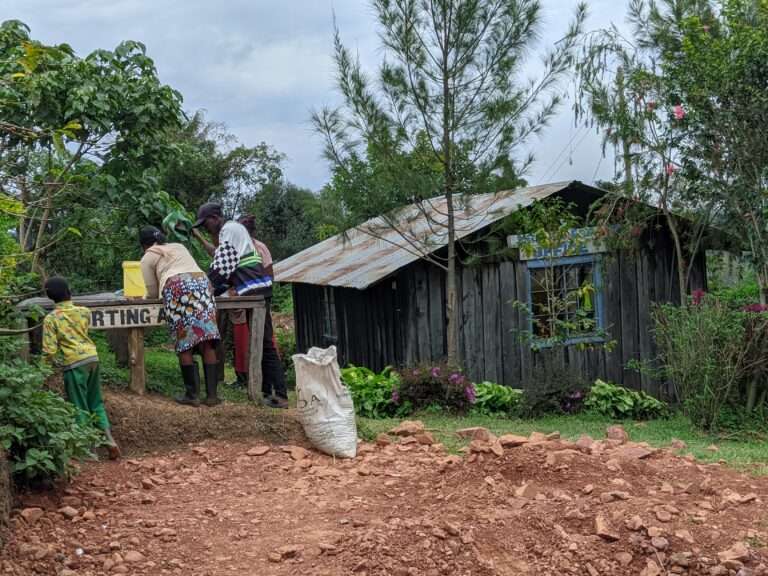
We approached what seemed to be the administrative office in the station. Outside was a weighing scale and a few ladies with coffee berries in small carrier bags. A kindly, stout woman emerged from the office and gave us a cheerful welcome. She’s the overseer of the station’s operations. My friend put on her salesman hat and the lady easily glided into a long conversation in the local dialect.
I asked if I could tour the place and she gave me a thumbs up. Her only concern was if I had perfume or any fragrance on. Strong perfumes or scents can distort or cover the natural smell of coffee. Luckily, I had nothing on.
My tour started from the coffee weighing station. I couldn’t help but notice that the majority of the workers and farmers bringing their harvests to the processing station were women. I did a piece on Amplifying the Voices of Female Coffee Workers in Burundi and the sight made me cringe at the familiar memory of the plight of women in the coffee industry.
Terroir
When walking to the sorting area, I imagined the coffee would have a tea-like, vegetal, grassy flavor with a woody body. At such a high altitude (2000m) coffee cherries develop sugars and acids in a slow maturation process. The high variations in night/day temperatures, less oxygen, high rainfall, and more exposure to sunlight lengthen the development of the coffee beans resulting in bold flavors.
We sampled Ngoino’s freshly roasted coffee before leaving the wet mill. I didn’t have the highest expectations, but the cup quality took me by surprise. The lively acidity and sugarcane sweetness made me tick. The cup profile confirms the scientific basis that claims high altitude coffees score high in flavor and aroma. Though the acidity was notably mellower than that of super-high altitude coffees like Nyeri and Kirinyaga.
Processing
Nearly all Kenyan coffee is double washed to achieve a national signature taste. In the early days when the supply sector was developing, farmers got a clear incentive to do more of the washed process because the naturals fetched poor returns on the international market. Susceptibility to rot is the reason why Kenyan naturals are still unpopular. The heavy rainfall
season in Kenya is usually from March to May and the largest coffee harvest is between March and June. The coincidence makes natural processing a tough choice as it is difficult to achieve even drying and fermentation of the cherries.
Nevertheless, my dear countrymen directed their natural processing efforts to lower quality cherries a.k.a mbuni and assigned them a grade: MH/ML, meaning Mbuni Heavy or Mbuni Light. Sadly, this has been the only use for natural processing of coffee in Kenya since the introduction of the Coffee C trading structure in 1963. If you are lucky you may bump into a few farms that have embraced natural processing for their best cherries like Ruera farm in Kiambu.
A Kenyan natural has a muted acidity and syrupy-sweetness with dominant fruitiness depending on where it’s from. Many have the traditional cocoa backbone and typical winey body. If you strictly go natural with Kenyan coffee you will hardly encounter the tomato-gravy acidity we are globally identified with.
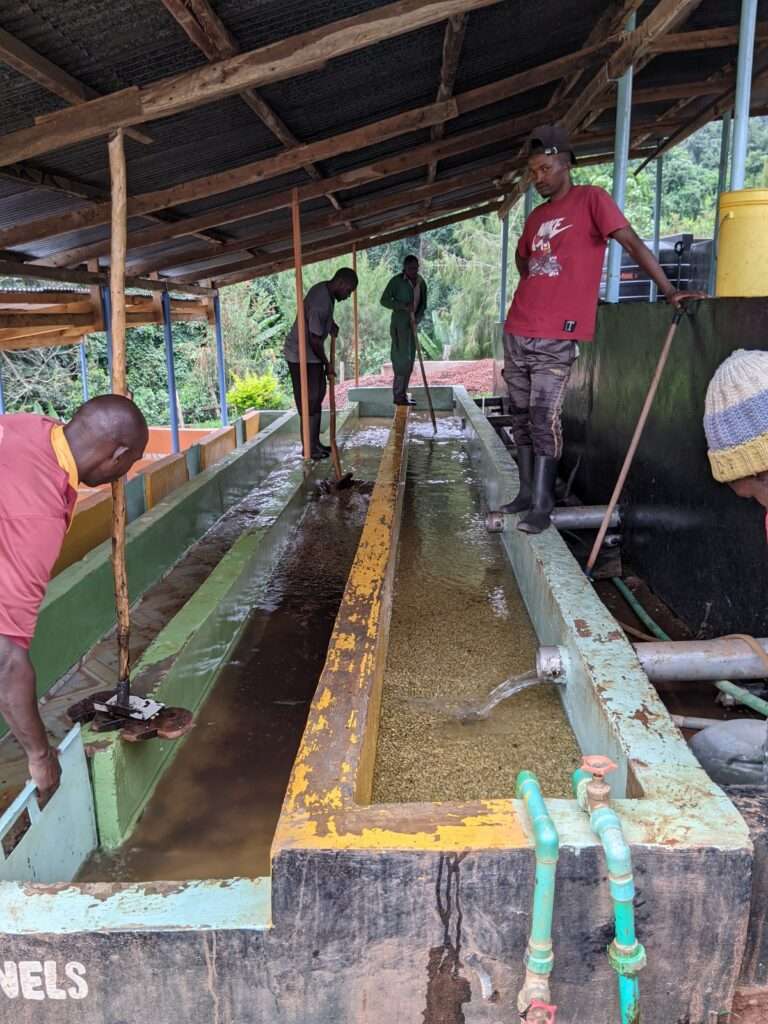
Ngoino’s coffee is double-washed. I witnessed the entire process. I know what to expect from wet processing: more pronounced acidity and higher clarity in flavor. The cup we had at the mill was nothing less. The acidity was moderate, and the black-tea quality very apparent. The herby, vegetal note I’d imagined wasn’t there. Instead, I got a vibrant spicy and woody background note.
This flavor profile isn’t too far from what other coffee farms or lots in the South Rift region offer. The unifying quality for the region is an acidity softer than the classic Kenyan crispness.
For instance, Kichawir Farmers Cooperative Society (still in Kericho County) produces Kenya AA with a sweet caramel taste and citrusy- grapefruit juice notes.
How to Brew ‘Tea-like’ Coffee
When you see ‘tea-like’ on your coffee bag, it means the beans have a black-tea note or floral tea attributes like chamomile, bergamot, jasmine etc. It can also mean the beans have less body and are a bit bland like tea. Ngoino coffee is not the latter because it has plenty of body and interesting character.
For any coffee that has a tea-note, I find that using stronger brewing ratios (less water/more coffee) balances the flavor, making it sweeter and less dry. Here is an illustration with the V60 method:
- Grind your coffee beans to a medium fine and measure 17 g. Heat 255 g of water to 96°C (204.8°F). We are aiming for a lower ratio of 1:15.
- Place a paper filter on the dripper and rinse it with hot water to preheat the brewer and get rid of the papery tastes. Use a bleached filter because natural/unbleached filters add unwanted notes.
- Add the 17 g of medium fine coffee to the filter.
- Start a timer and pour 40 g of hot water over the coffee grinds.
- Let the coffee bloom for 35 to 45 seconds, then pour the remaining water in gentle, circular motions. Avoid the edges of the paper filter.
- Let it brew for 2.5 to 3 minutes.
- Enjoy!
Note: You may get better results if you sing a-weema-weh when brewing your African coffee with tea notes.
In a Nutshell
Coffee from South Rift Kenya is for the palate that loves a muted acidity, black-tea notes, sugarcane/caramel sweetness and a rich woody body. The overall earthy tone is hard to mess up and does not require an artisanal barista to pull off. Check out my other article: Best Kenyan Coffee to discover top Kenyan coffee brands.